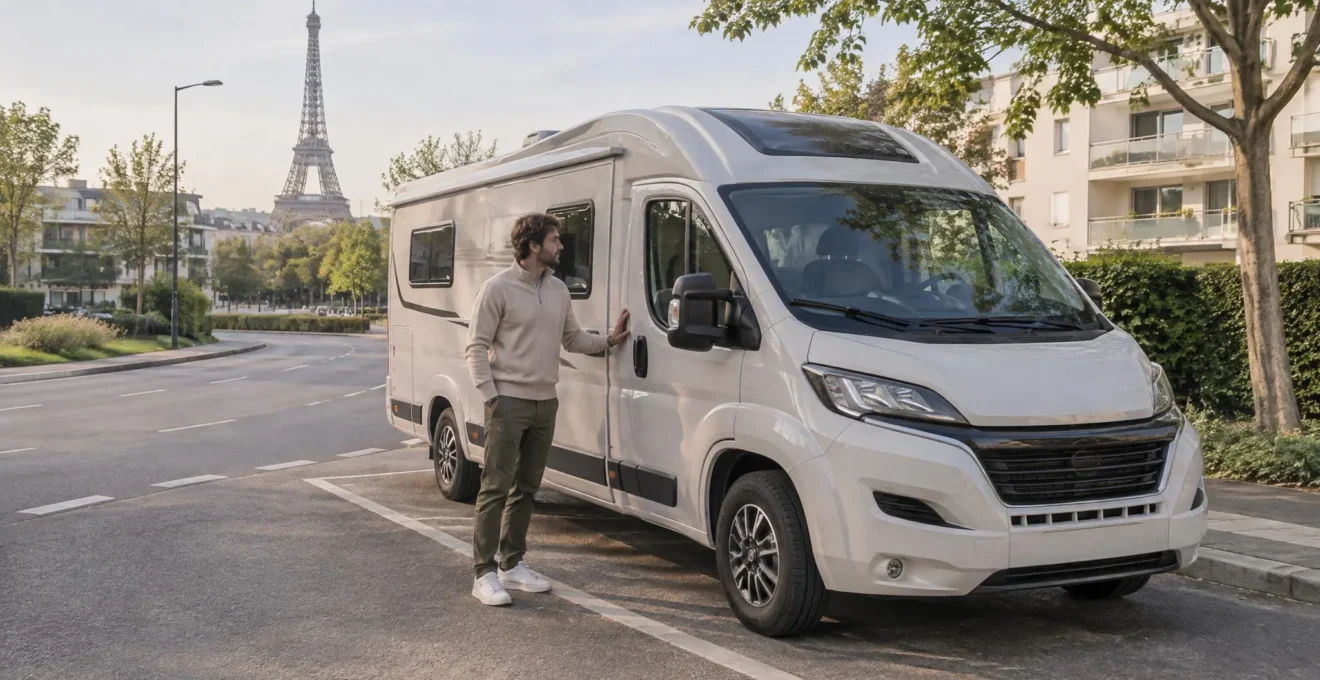
After collecting a campervan in Paris, our practical starting recommendation is around one hour of driving on your first day. As a rough illustration, 50-100 km (30-60 miles) may be manageable on straightforward roads, but this is not an official French limit or a guaranteed distance. Traffic, fatigue, collection time, daylight and your familiarity with the vehicle all influence how far you should go.
The best first journey is one that gives you time to get comfortable behind the wheel, reach a suitable overnight stop and understand how your campervan works. A shorter drive can make the following day considerably easier.
How far should you drive on your first day?
Plan approximately one hour behind the wheel. Around 50-100 km (30-60 miles) can be a useful illustration on straightforward roads, but reduce this distance if you are tired, collect the vehicle late or encounter complicated traffic.
There is no universal French legal kilometre allowance for the first day of a campervan holiday. The useful target is therefore a planning decision, not a fixed rule. An hour of driving on an uncomplicated road can feel very different from an hour spent negotiating busy junctions, narrow streets or unfamiliar urban traffic.
Collecting a campervan is more than simply picking up the keys: the handover includes vehicle checks and an introduction to the equipment, so allow time for this before deciding how far to drive. At the Paris-Nord Roissy location, WeVan describes a collection process lasting approximately 30 minutes to one hour. This makes campervan hire at Roissy a useful starting point when planning your first driving day around the actual pickup arrangements.
Do not calculate your first day simply by counting the hours between collection and sunset. Allow additional time to inspect the vehicle, adjust the mirrors, understand the controls, find fuel if necessary and reach your overnight destination without rushing.
What can shorten your first day’s driving distance?
Use these situations to adapt your first-day plan to the driver, vehicle and route.
| Situation | Practical adjustment | Reason |
|---|---|---|
| Rested driver, early pickup and straightforward roads | Use approximately one hour as a starting plan. | Allows initial familiarisation without committing to a long first leg. |
| Long flight or signs of fatigue | Shorten the drive or postpone departure until properly rested. | Fatigue can make vehicle handling and traffic decisions more demanding. |
| Late collection or limited daylight | Choose a closer overnight stop. | Leaves time for parking, equipment setup and arrival before darkness. |
| Unfamiliar or larger campervan | Allow time for a short practice drive and parking manoeuvres. | Vehicle dimensions and handling may differ from an ordinary car. |
| Heavy traffic or complicated route | Choose a simpler departure route and reduce the planned distance. | Distance alone does not represent driving effort or elapsed time. |
For long journeys, French government guidance recommends taking a break every two hours, starting well rested and planning around traffic rather than imposing a rigid arrival deadline. These principles are particularly useful when deciding whether to extend a first-day drive; see the French road safety advice before setting out.
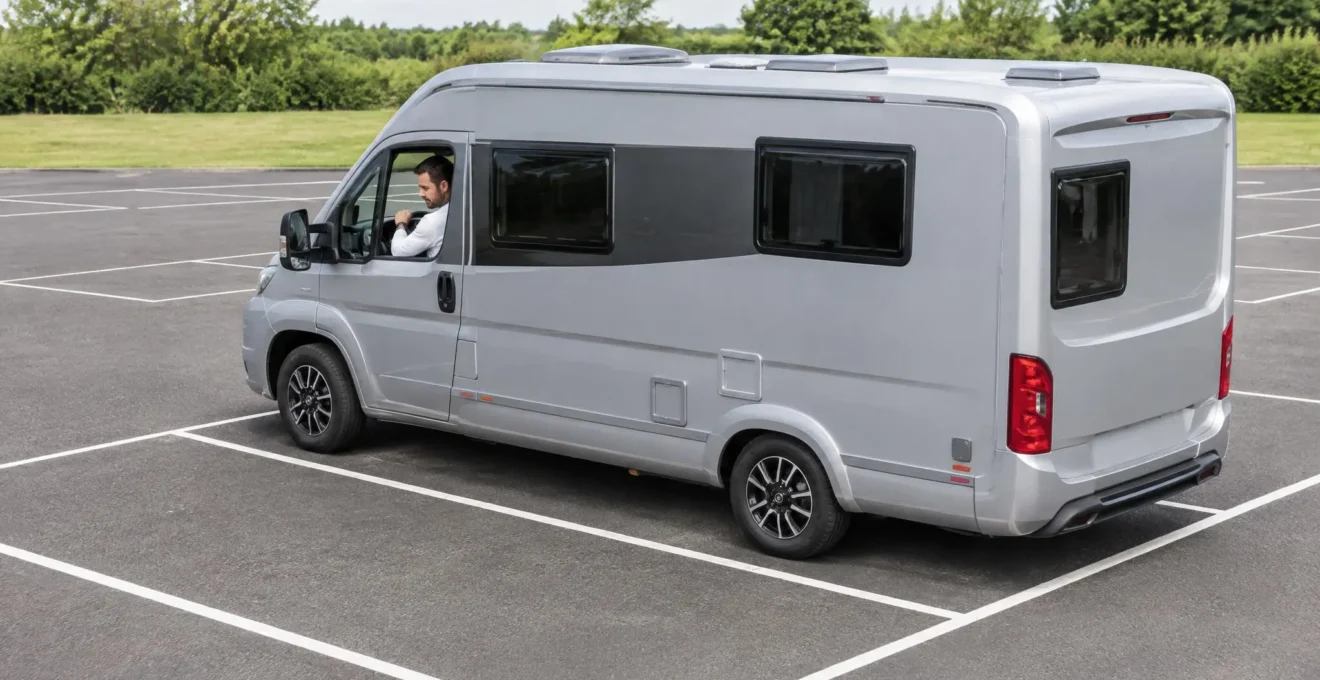
Fatigue after travelling
After a tiring journey, postpone departure until rested. Stop sooner than two hours if fatigue appears. ASFA, the French motorway-sector association, also provides advice on responding to tiredness.
When fatigue appears, do not try to complete the remaining distance simply because the destination is close. ASFA recommends taking a 10-20-minute break at the first signs of tiredness, as explained in its motorway fatigue guidance. If you are too sleepy to drive safely, stop and rest before continuing.
Pickup time, traffic and daylight
A morning collection generally leaves more flexibility than an afternoon pickup, but the departure time alone does not determine how far you should travel. You must account for the handover, traffic around the airport, the route out of the Paris area and the time needed to park at your destination.
For example, a driver collecting a campervan late in the afternoon may be better off choosing a nearby overnight stop than attempting to reach a distant attraction before dark. A complicated urban route can also require more concentration than a longer, straightforward motorway journey. Plan for the actual road conditions rather than estimating arrival from distance alone.
How to get comfortable driving a campervan
A campervan does not necessarily handle like the passenger car you normally drive. Its height, width, visibility and turning characteristics may be unfamiliar. Before setting off on a longer route, use a safe, uncomplicated area to understand how the vehicle responds.
Practise the manoeuvres that feel different
Start by checking the vehicle’s actual height and width, including any relevant external equipment. Adjust the mirrors before moving and identify the blind spots. Pay attention to how much space the vehicle occupies in its lane and how its rear end behaves when turning.
Next, practise gentle acceleration, controlled braking and a few uncomplicated turns. Find a suitable open parking area where you can reverse and park without pressure from other vehicles. The objective is to understand the vehicle’s dimensions and manoeuvring requirements before attempting tight spaces or complicated city streets.
Check the vehicle and your route before leaving
Use the checklist before departure. Around Paris, check your rental’s Crit’Air emissions classification and current low-emission-zone (ZFE) rules for your route.
- Confirm the vehicle’s height, width and overall dimensions.
- Adjust the mirrors and check visibility around the vehicle.
- Locate the lights, indicators, wipers and essential controls.
- Check fuel, tyres, warning lights and vehicle documents.
- Understand the onboard equipment covered during the handover.
- Practise turning, braking and parking in a safe location.
- Check your route and any applicable Crit’Air or ZFE restrictions.
- Confirm your first overnight stop and its vehicle-access rules.
Choose a first overnight stop that keeps the day manageable
Choose your first overnight stop according to the time left after handover and vehicle familiarisation, then check the three criteria below.
Plan for the arrival, not just the drive. A manageable first day leaves enough time to park, check your surroundings, organise belongings and understand the campervan’s equipment. Confirm that your chosen overnight location accepts the vehicle and permits the intended stay.
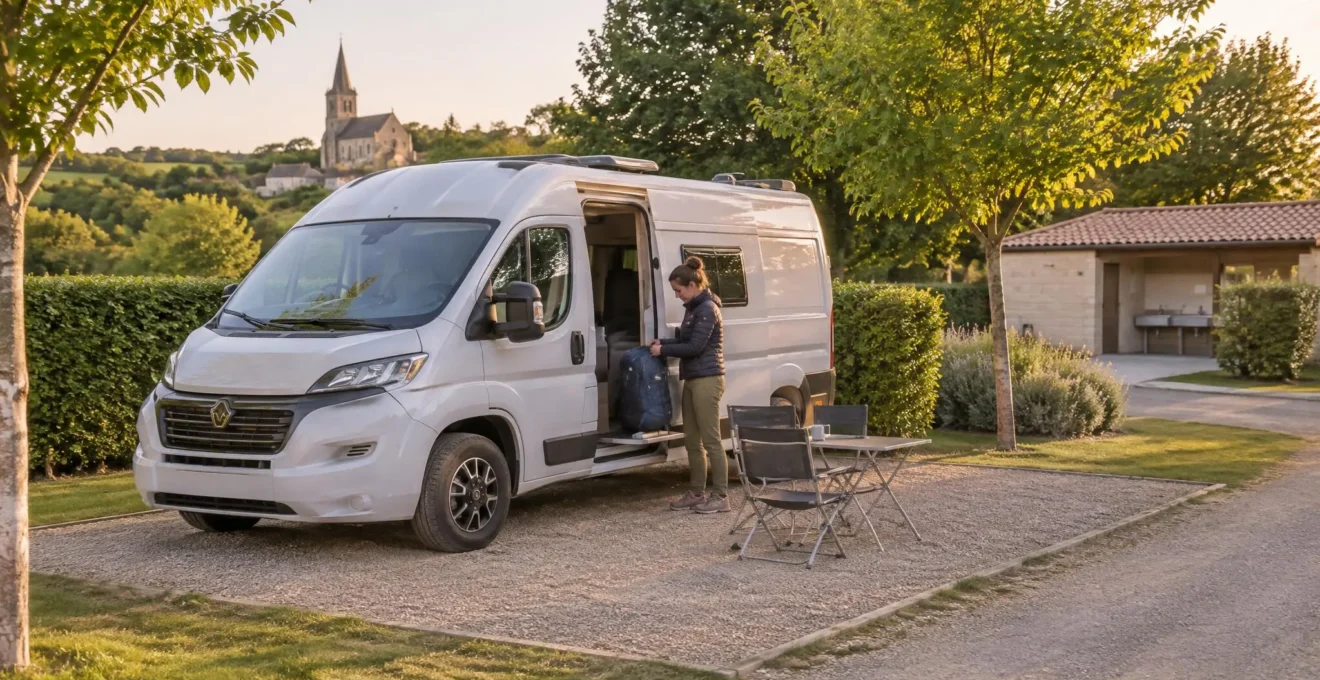
Before committing to a destination, check three things:
- Access: Is the approach straightforward, without unnecessarily narrow roads or difficult manoeuvres?
- Parking: Does the pitch or designated space accommodate the actual length and width of your campervan?
- Arrival arrangements: Can you arrive with enough daylight and time to settle in, and have you confirmed the overnight rules?
Compare the expected journey time with the time available before the site’s confirmed arrival deadline, leaving room to settle in before dark. If that would mean rushing, choose a closer authorised stop or confirm more suitable arrival arrangements. An arrival deadline should never be a reason to continue driving when tired.
Once you have completed your first overnight stay, you will have a better understanding of the vehicle, its equipment and your own driving comfort. You can then plan a longer journey with more confidence, using realistic travel times and suitable stops.
Choose a short first leg that lets you arrive alert and settle in without rushing. Extend it only if you are rested, comfortable with the vehicle and confident that the route and arrival arrangements leave enough time. If any of those conditions change, shorten the journey rather than forcing the original plan.